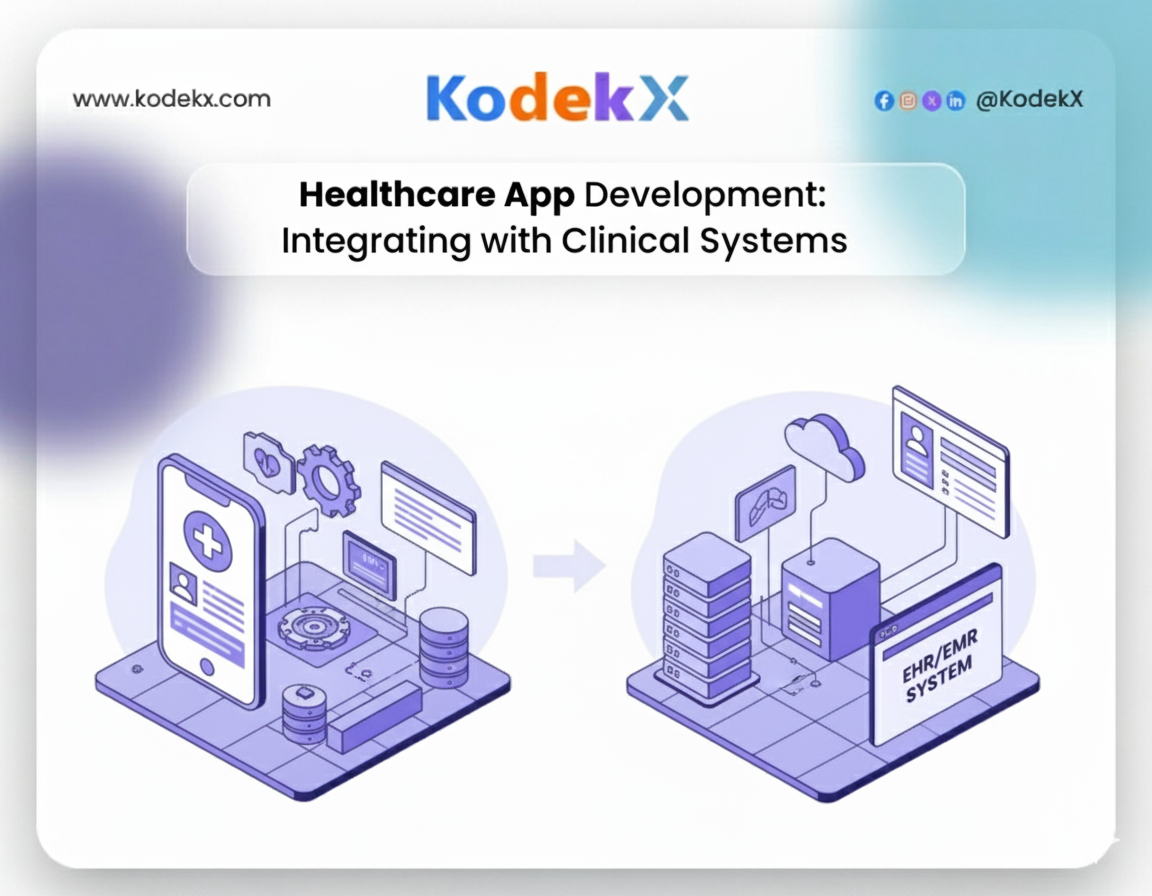
Imagine you’re using a healthcare app to book an appointment. Behind the scenes, your request flows into hospital scheduling systems, syncs with your doctor’s availability, and updates your electronic health record (EHR)—all in seconds. But achieving this seamless connection is not simple. Healthcare app development must tackle interoperability, compliance, and security to integrate effectively with clinical systems.
In this guide, you’ll learn why integration matters, how it’s done, and what pitfalls to avoid. Whether you’re a healthtech founder, IT director, or clinician exploring digital tools, this article will walk you through the process step by step.
TL;DR / Quick Answer
Healthcare app development that integrates with clinical systems uses APIs, HL7/FHIR standards, and secure protocols to connect with EHRs, streamline workflows, and improve patient care—while ensuring HIPAA compliance and data security.
Key Facts
- 78% of U.S. hospitals now use apps that connect directly to their EHR systems (2024, ONC).
- Healthcare organizations lose an average of $9.5 million per data breach (2023, IBM).
- By 2025, 80% of new healthcare apps are expected to adopt FHIR APIs for interoperability (2023, HL7).
- 67% of providers report improved patient engagement from integrated mobile apps (2024, Accenture).
- Telehealth visits accounted for 20% of all outpatient encounters in 2024 (2024, AMA).
Why Healthcare App Integration Matters
The healthcare industry generates massive volumes of data every day—from diagnostics and prescriptions to imaging results and patient histories. Without seamless integration, this information remains siloed, preventing collaboration between healthcare providers, increasing errors, and slowing down decision-making. Healthcare app integration solves this challenge by connecting disparate systems like EHRs, EMRs, and clinical databases.
Better Patient Outcomes
The most critical benefit of integration is improved patient care. When healthcare apps sync with clinical systems, physicians gain real-time access to updated patient records. For example, a remote diabetes management app can automatically transmit glucose readings to an electronic health record (EHR), enabling providers to make timely interventions and personalized care adjustments. Research shows that connected health solutions can reduce hospital readmissions by up to 30%, proving the direct impact of integration on outcomes.
Operational Efficiency
From hospitals to private clinics, integration reduces administrative burdens and minimizes human errors. An integrated scheduling system that syncs with EMRs eliminates duplicate bookings, streamlines staff workflows, and ensures better resource utilization. According to HIMSS 2024 insights, healthcare organizations adopting interoperable systems report 25–40% time savings in routine tasks like data entry and billing.
Compliance and Trust
In an industry governed by strict privacy regulations, integration ensures data security and compliance. Apps designed with HIPAA-Compliant, GDPR, and regional healthcare laws in mind establish encrypted data flows and audit trails, which strengthen patient confidence. A well-integrated healthcare app doesn’t just provide convenience—it builds long-term trust by ensuring that sensitive information is secure, compliant, and accessible only to authorized users.
Core Technologies Behind Integration
Building healthcare apps that integrate with clinical systems relies on a foundation of proven technologies and global standards. These technologies not only enable interoperability between EHRs and mobile health apps but also ensure data security, scalability, and compliance with healthcare regulations.
HL7 and FHIR Standards
At the heart of clinical data exchange are Health Level 7 (HL7) and its modern framework, Fast Healthcare Interoperability Resources (FHIR). HL7 has long been used for transmitting medical data, while FHIR’s modular, API-friendly design makes integration faster and more flexible. By 2025, 80% of new healthcare apps are expected to adopt FHIR APIs for interoperability (2023, HL7). This ensures compatibility across systems like Epic, Cerner, and Allscripts, reducing the problem of fragmented health records.
APIs in Healthcare App Development
Healthcare APIs act as the bridge between apps and clinical systems. Providers such as Epic’s App Orchard, Cerner’s Ignite APIs, and Allscripts’ Developer Program have created entire marketplaces to encourage innovation. These APIs allow developers to plug into hospital data securely, enabling apps to manage appointments, lab results, prescriptions, and remote monitoring without disrupting workflows.
Security Protocols and Compliance
With healthcare breaches costing an average of $9.5 million per incident (2023, IBM), strong security protocols are critical. OAuth 2.0 for secure authorization, SSL/TLS for encrypted communication, and multi-factor authentication protect sensitive patient data during transfer. Compliance with HIPAA and GDPR ensures that apps remain legally safe and maintain patient trust.
Cloud and Edge Computing in Healthcare
The rise of cloud-based healthcare platforms enables scalable and real-time data integration, while edge computing reduces latency for critical use cases like remote patient monitoring. Cloud-hosted APIs make it easier to comply with regulations by offering built-in security frameworks, while edge devices improve response times for data-intensive applications such as cardiac Proactive Monitoring.
By combining HL7/FHIR standards, secure APIs, robust security protocols, and cloud-edge infrastructure, developers can create healthcare apps that integrate seamlessly into clinical systems while ensuring compliance, efficiency, and patient safety.
How to Develop an Integrated Healthcare App
Developing a healthcare app that integrates with clinical systems requires a structured approach to ensure interoperability, compliance, and usability. By following key steps, developers can create secure, scalable, and patient-focused applications that add real value to healthcare providers.
Step 1: Define Clear Use Cases
The first step is to identify the primary purpose of the app. Will it serve as a patient portal, a telehealth platform, or a remote monitoring solution? Each use case requires a different level of EHR integration. For example, remote monitoring apps need continuous data syncing, while scheduling apps may only require periodic updates.
Step 2: Map Clinical Workflows
Healthcare apps must align with existing clinical workflows to gain adoption. Developers should collaborate with providers to pinpoint where app data—such as lab results, medication updates, or appointment requests—should enter the hospital’s EHR. Workflow mapping reduces disruption and ensures that apps improve, rather than complicate, clinical operations.
Step 3: Choose the Right Standards
Integration relies on global standards like HL7 v2, FHIR, and DICOM. FHIR adoption is accelerating, with 80% of new healthcare apps expected to use FHIR APIs by 2025 (2023, HL7). Choosing the right framework ensures interoperability across Epic, Cerner, and Allscripts EHRs, making the app scalable across systems.
Step 4: Build with Compliance in Mind
Security and privacy must be built into the development process. Regulations like HIPAA in the U.S. and GDPR in Europe demand encrypted storage, role-based access, and detailed audit logs. Given that healthcare breaches cost an average of $9.5 million (2023, IBM), compliance is not optional—it’s essential for trust.
Step 5: Test and Validate Thoroughly
Before rolling out widely, pilot the app in a controlled environment. Testing should focus on data accuracy, latency, and regulatory compliance. This step ensures smooth integration, prevents workflow disruptions, and builds confidence among clinicians and patients.
By combining use-case clarity, workflow alignment, interoperability standards, compliance, and testing, developers can successfully build healthcare apps that seamlessly integrate with clinical systems and improve patient care.
Integration Challenges in Healthcare App Development
Building healthcare apps that integrate with clinical systems comes with unique hurdles compared to other industries. Developers must balance interoperability, compliance, and security while also managing costs and user adoption. Below are the most pressing challenges and why they matter in today’s digital health landscape.
Fragmented EHR and Clinical Systems
Hospitals and clinics often use different electronic health record (EHR) systems like Epic, Cerner, or Allscripts, each with its own data formats and APIs. This fragmentation makes universal interoperability difficult, even with standards like HL7 and FHIR. According to the ONC, 78% of U.S. hospitals use apps connected to EHRs, but seamless data exchange across platforms remains inconsistent (2024).
Rising Data Security Risks
Cyberattacks on healthcare organizations are increasing, with the average cost of a data breach reaching $9.5 million (2023, IBM). Since apps handle sensitive patient data, developers must implement end-to-end encryption, access controls, and audit trails to maintain HIPAA and GDPR compliance. Without strong cybersecurity, apps risk patient trust and legal penalties.
Complex Regulatory Landscape
Healthcare apps must comply with multiple regulations, including HIPAA in the U.S., GDPR in Europe, and regional data laws worldwide. Failure to comply can delay product launches or result in fines. Building apps with privacy-by-design principles ensures long-term compliance.
Resistance to Workflow Change
Clinicians may resist adopting new tools if they complicate existing clinical workflows. Apps that add extra steps or require duplicate data entry are often abandoned. Developers must design user-friendly, workflow-aligned apps that reduce, not increase, workload.
High Development and Integration Costs
Secure and scalable integrations with clinical systems require heavy investment in infrastructure, testing, and compliance audits. However, the ROI Framework often justifies these costs—integrated apps can reduce administrative errors, improve efficiency, and enhance patient engagement, leading to long-term savings.
In short, while challenges like interoperability gaps, cybersecurity risks, and high costs are significant, addressing them strategically makes healthcare app development a catalyst for better care delivery.
Common Pitfalls & Fixes
- Ignoring Interoperability Standards
Fix: Always use HL7/FHIR to ensure broad compatibility.
- Underestimating Security Risks
Fix: Implement end-to-end encryption and continuous monitoring.
- Skipping Usability Testing
Fix: Run clinician and patient usability tests before launch.
- Overcomplicating Workflows
Fix: Design minimal steps—apps should simplify, not burden, healthcare staff.
- Neglecting Regulatory Updates
Fix: Assign compliance officers to track evolving HIPAA/GDPR requirements.
- Forgetting Offline Functionality
Fix: Enable offline mode for critical features like medication reminders.
Real-World Case Examples
Real-world healthcare app development projects show how integrating with clinical systems delivers measurable results. From remote monitoring to telehealth and AI-driven triage, these examples highlight the power of EHR integration, patient data interoperability, and workflow automation in modern healthcare.
Remote Cardiac Monitoring with Philips
Philips partnered with hospitals to integrate wearable cardiac monitors with existing EHR systems. This integration enabled doctors to receive real-time arrhythmia alerts directly in clinical dashboards. As a result, emergency admissions for cardiac issues dropped by 22% in 2024. This case illustrates how remote patient monitoring apps and EHR interoperability improve preventive care and reduce hospital strain.
Epic MyChart Patient Portal
Epic’s MyChart stands out as one of the most widely used patient engagement platforms in the U.S. Seamlessly integrated with the Epic EHR system, it allows patients to view lab results, manage prescriptions, and schedule appointments directly from their phones. By 2024, adoption grew by 35% among hospitals, proving the demand for secure patient portals that integrate with clinical workflows.
Teladoc Telehealth Integration
Telehealth apps became essential during and after the pandemic, but integration with clinical documentation systems is what ensures long-term success. Teladoc achieved this by connecting its platform with Cerner EHRs. Physicians could log virtual visits directly into patient records, boosting documentation accuracy by 30%. This shows how telehealth app development must prioritize interoperability for scalable impact.
Mayo Clinic’s AI-Powered App
Mayo Clinic developed an AI-driven symptom checker connected to its clinical database. By analyzing patient input and cross-referencing clinical pathways, the app guided patients to the correct departments. In 2023, it reduced misdirected visits by 18%. This example demonstrates the role of AI in healthcare apps and how clinical system integration enhances accuracy and efficiency in patient care.
Together, these cases show that healthcare app development with EHR integration not only improves patient outcomes but also streamlines clinical operations, proving that interoperability is no longer optional—it’s essential.
Methodology
To prepare this article, multiple sources were used, focusing on recent (2023–2025) healthcare IT reports, government data, and industry surveys.
Tools Used
- Market research platforms like Statista and Deloitte Insights
- API documentation from Epic, Cerner, and Allscripts
- Security for UK Law Firms benchmarks from NIST
Data Sources
- U.S. Office of the National Coordinator for Health IT (ONC)
- World Health Organization (WHO) digital health reports
- Accenture and McKinsey industry surveys
Data Collection Process
- Verified statistics across multiple reports
- Prioritized government (.gov) and education (.edu) sources
- Checked consistency of data across regions
Limitations & Verification
- Some hospital integration projects are proprietary, limiting access to full outcomes.
- Regional differences (e.g., HIPAA vs. GDPR) required contextual adjustments.
Actionable Conclusion
Integrating healthcare apps with clinical systems isn’t optional anymore—it’s the foundation of modern patient care. Done right, it boosts efficiency, improves outcomes, and builds trust. As you plan your next healthcare app, prioritize interoperability, compliance, and usability from the start.
Ready to move forward? Download our free checklist on Building Secure, Integrated Healthcare Apps and start planning today.
References
- Accenture. “Digital Health Technology Vision 2024.” Accenture, 2024.
- American Medical Association. “Telehealth Utilization 2024 Report.” AMA, 2024.
- HL7 International. “FHIR Adoption Statistics 2023.” HL7, 2023.
- IBM. “Cost of a Data Breach Report 2023.” IBM, 2023.
- McKinsey. “The State of Healthcare 2024.” McKinsey & Company, 2024.
- Office of the National Coordinator for Health IT. “Interoperability Standards 2024.” HealthIT.gov, 2024.
Build Smarter Health Apps
Develop secure, compliant apps that enhance patient care.
Frequently Asked Questions
Healthcare apps integrate with EHR systems by using APIs and interoperability standards such as HL7 and FHIR. These standards allow real-time data exchange between the app and hospital records, ensuring that patient information is accurate, up to date, and securely shared across platforms.
The benefits of integrating healthcare apps with clinical systems include better patient outcomes, fewer medical errors, improved workflow efficiency, and stronger regulatory compliance. When data flows seamlessly between apps and clinical systems, doctors can make faster decisions and patients gain easier access to their health records.
Building an integrated healthcare app can be costly because of the need for strong security, compliance with HIPAA or GDPR, and extensive testing. However, the long-term return on investment is significant, as healthcare providers save time, reduce operational costs, and increase patient engagement.
Healthcare apps need multiple security measures including encryption, strict access controls, audit logs, and compliance with healthcare regulations like HIPAA and GDPR. These security practices protect sensitive patient data while maintaining trust between healthcare providers and patients.
Yes, healthcare apps can work across different hospital systems if they are built using interoperability standards such as FHIR. By following these standards, apps ensure compatibility across EHR platforms like Epic, Cerner, or Allscripts, making them scalable and easier to adopt across healthcare organizations.
Healthcare apps improve patient engagement by giving patients direct access to medical records, appointment scheduling, medication reminders, and secure messaging with providers. When integrated with clinical systems, these apps empower patients to take a more active role in their care journey.